Your Most Profitable Job Might Be Losing Money
A job can show a healthy margin on the monthly report and still close in the red. The two numbers that catch it, and the three questions that settle it.
 Written for the newsletter of Vokeso, a Microsoft Dynamics 365 Business Central partner in Montreal.
It's the monthly review. You scroll the job report and stop at an install job: $103,000 contract, sold at a 32% margin, now running at 36%. Ahead of plan. You move on.
Months later, that job closes $16,600 in the red.
Nobody cut corners. Nobody made a mistake in the books. The work had been costing more than the estimate from the start, at the same pace the whole way through. The problem was what the report let you see.
Go back to that monthly review. The report was answering one question: how has this job gone so far? It never asked the one you needed: how will it end?
The answer was sitting in two numbers nobody had put side by side. The crew was about a third of the way through the work. Two thirds of the contract had already been billed. The deposit and the early milestones came in fast, so most of the revenue was in and most of the cost wasn't. That's what made the margin look so good. It was borrowing from the end of the job.
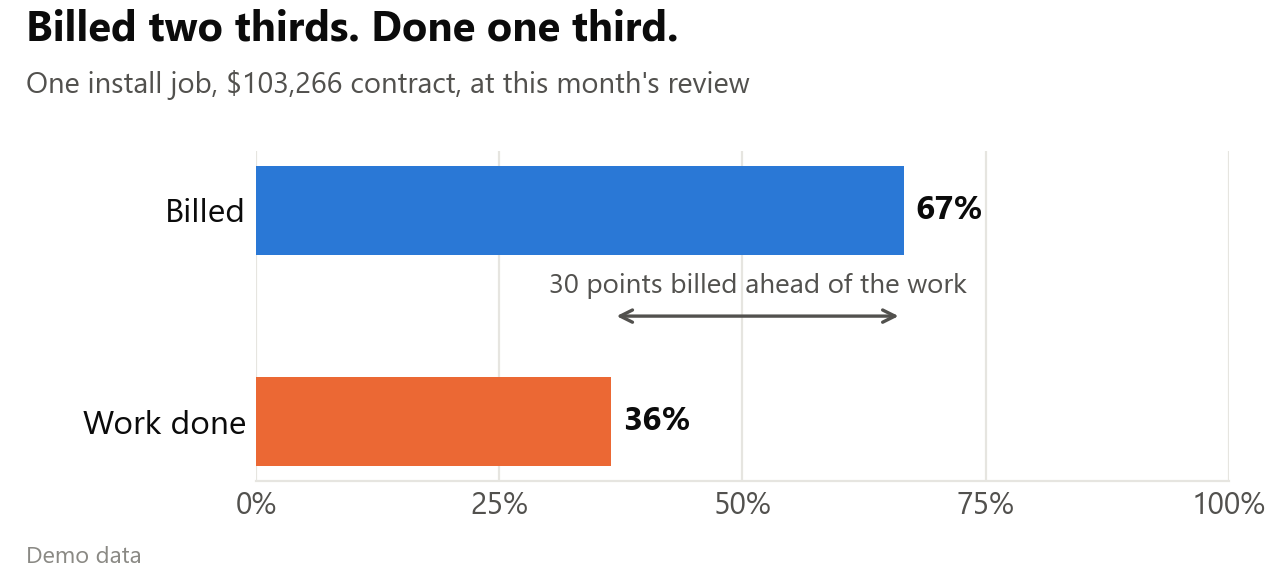
Run the job forward at the pace it was going and the loss was right there, months early.
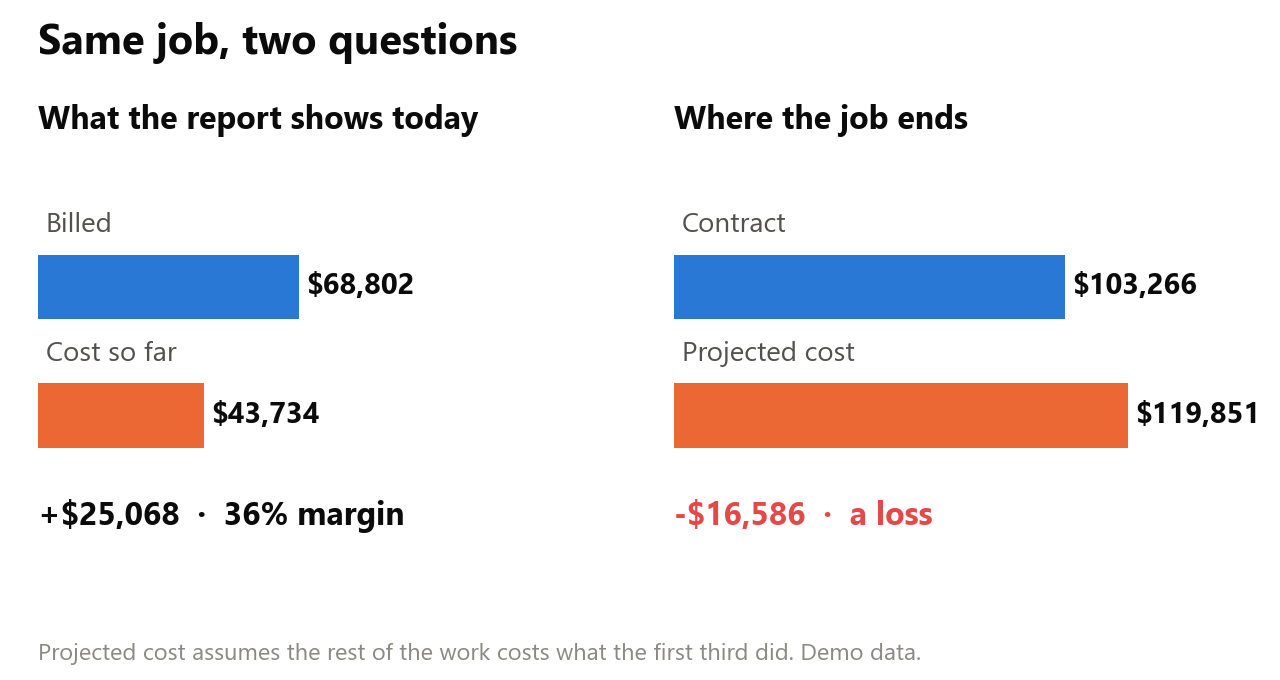
With those two numbers on one page, three questions do the rest:
- How much of the work is actually done? From the project manager or the milestones. Not the invoices, and not cost against budget, because an overrun inflates that too.
- At that pace, what will the whole job cost? Cost so far divided by percent complete.
- Is that more than the contract? Then it's a losing job, whatever the margin says.
The takeaway: you didn't lack data. Billing was in your ERP, and your project managers knew roughly where each job stood. What was missing was a view built around the question that matters: how a job will end, not how it has gone. Line up percent billed against percent complete, sort by the gap, and the jobs at the top are this week's list, while a change order or a conversation with the customer can still save them. At closeout, the only fix left is a write-off.
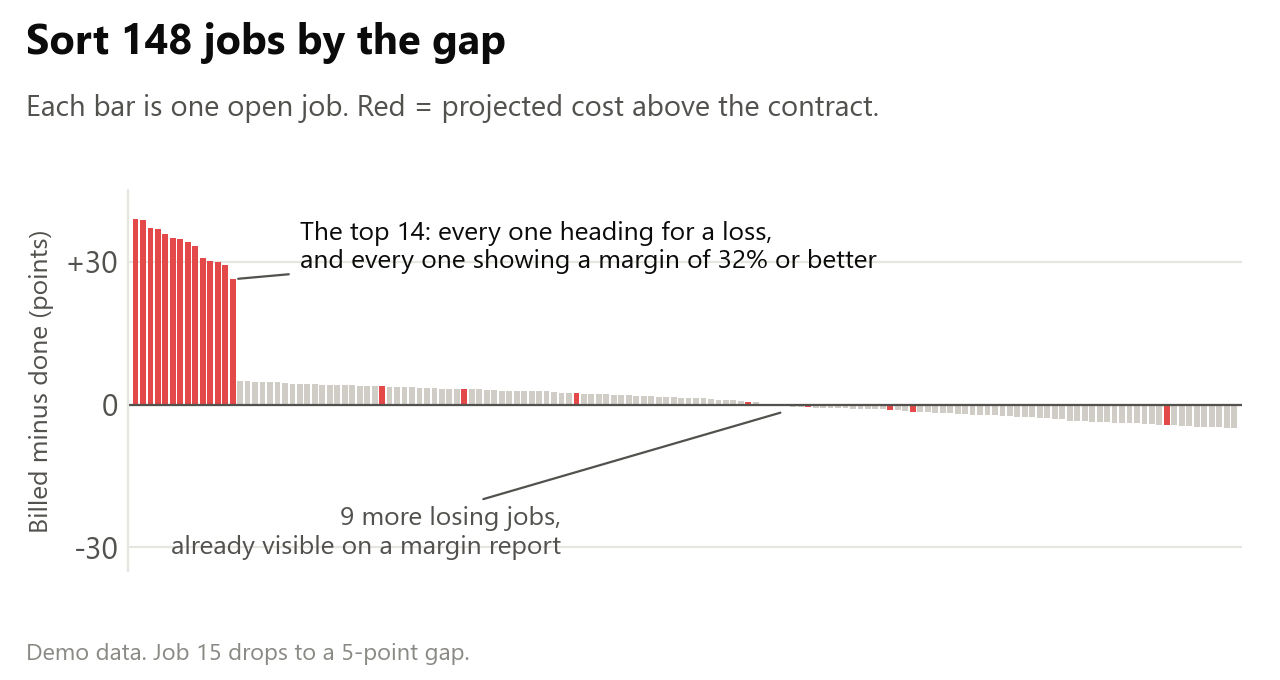
The example and the 148 jobs come from a synthetic demo dataset, not client data.
About the Author
Founder & Principal Consultant
Josh helps SMBs implement AI and analytics that drive measurable outcomes. With experience building data products and scaling analytics infrastructure, he focuses on practical, cost-effective solutions that deliver ROI within months, not years.
Related Posts
September 24, 2026
February 14, 2026
February 5, 2026
Want reporting your team will use?
Palavir builds Power BI and Tableau dashboards, KPI frameworks and reporting for small and mid-sized businesses.